Today's post is a big departure for me. That's because I didn't write it. Instead, I share, with permission, a post titled "Sorrow of the Scrub," by Rollins College Professor Lesley Kemp Poole.
The post reflects on the harsh reality of childhood mortality in frontier Florida. One statistic cited says up to 50 percent of children died before age 5 in Florida in the late 1800s. Some women buried almost all their children.
The reasons for the deaths are many, but the grief such losses evoked spans time and place. The post discusses how burying so many children affected both real and fictional mothers in the Florida scrub. What makes the article so compelling are memories shared by descendants - including the author - of some of those pioneers.
Childhood death is a stark reminder of the harsher side to the pioneer experience, darker than what I usually write about. But important to know.
The post first appeared on The Marjorie (https://themarjorie.org), a reporting outlet focused on Florida's deep human history and unique environment. The site's name channels the legacies of three important Marjories in Florida history: author Marjorie Kinnan Rawlings, conservationist Marjorie Harris Carr and advocate and author Marjory Stoneman Douglas.
Enjoy.

The Sorrow of the Scrub
Editor’s Note: Leslie Kemp Poole pens Lessons from the Marjories, a column meditating on the legacies of Marjorie Kinnan Rawlings, Marjorie Harris Carr, and Marjory Stoneman Douglas.
When I was in sixth grade, one of our school assignments was to read “The Yearling” by Marjorie Kinnan Rawlings. It is a novel of life in the Big Scrub in north Florida that achingly depicts the hardscrabble existence humans experienced there in the 1870s. The central joy of the 1938 book was a pet fawn that Jody Baxter adopts, finding companionship in his lonesome youth.
It was a joyous account of friendship until the ending when Jody realizes that his now-grown deer threatens the very lives of his family by eating their crops, creating the very real possibility of starvation. What happens after this, I will leave for you to read. Or remember.
One of the book’s main characters is Ora Baxter, Jody’s mother. She is described as a “buxom girl,” twice the size of her scrawny husband Penny. And although she seemed “built for child-bearing” and she bore many, all but Jody—the last—were frail infants that sickened and quickly died. Rawlings, who had visited a pioneer cemetery, wrote:
Penny had buried them one by one in a cleared place among the black-jack oaks, where the poor loose soil made the digging easier. The plot grew in size until he was compelled to fence it in against the vandalism of hogs and pole-cats. He had carved little wooden tombstones for all. He could picture them now, standing white and straight in the moonlight. Some of them had names: Ezra Jr.; Little Ora; William T. The others bore only such legends as Baby Baxter, aged 3 mos. 6 days. On one, Penny had scratched laboriously with his pocket-knife, “She never saw the light of day.”
As a young reader, I viewed Ora Baxter as a dark, unemotional woman. She didn’t play with her son and seemed to spend more time scolding than holding him. But as an adult, as a mother, I get it. So did Rawlings, who wrote that Ora “had given all she had of love and care and interest to those others.” By the time Jody was born, Ora had buried too many children to trust that he would survive. It is a fear that hovers around her throughout the book.
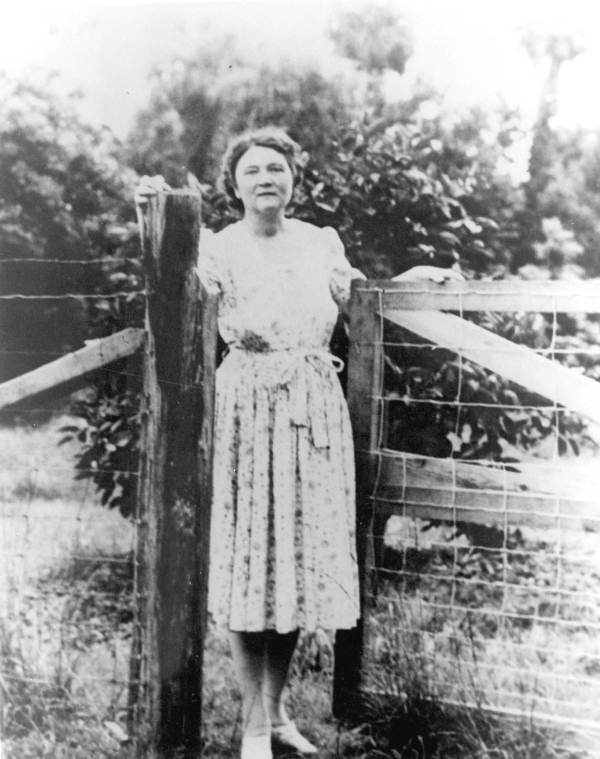
Rawlings, a college-educated Yankee transplant to the Big Scrub, may have come from city life and completely different circumstances, but she recognized the suffering that women in the area had long endured, personifying it with Ora. Rawlings developed many of her stories by visiting—even living with—families in rural Florida in the 1930s and collecting their stories. For “The Yearling,” she visited “the strange and remote place in the scrub” where she had once stayed with an “old hunter,” she wrote to her editor, Max Perkins, in 1935. “The old man is dead, his wife moved away with her children—she was his second wife—and the house that he had lived in for sixty years is beginning to cave in under the pressure of that peculiar despairing frailty that seems to possess uninhabited places, as though the supporting breath had left the body of the house, along with the human occupants.” Despair and frailty – she understood life in the Scrub.
So does Kathlyne Walkup Sheppard, a descendant of one of the largest Big Scrub families, the McDonalds. At the 2026 annual conference of the Marjorie Kinnan Rawlings Society, Sheppard, who speaks with a soft southern lilt, shared stories of her family that reflect many of the circumstances in "The Yearling.” Sheppard said her ancestors were “authentic Florida Crackers” in east Marion County who “sounded like southern cornbread” and lived off the land by trapping, hunting, and growing crops in the marginally productive soil, much as Rawlings described. They “are my people,” she told the room of rapt attendees.
Sorrow and death were once the stuff of most lives, which is why Rawlings’ depiction of Ora’s misery and bitterness, while 'normal' for the era, still strikes a chord today.
Leslie kemp poole
Her great-grandmother, Nancy Lenora Sewell, had much in common with Ora. In the late 19th century, it has been estimated that nearly 50 percent of Florida children didn’t make it to age 5 because of rampant childhood diseases, including yellow fever, whooping cough, measles, flu, tuberculosis (TB), and smallpox, along with a lack of local medical care. Today that number is 4 percent. If a family was lucky, it might be treated by a doctor who traveled on horseback, but many isolated folks depended on natural remedies and treatments that might include turpentine and kerosene, Sheppard noted, adding that her “Uncle Joe” created a much-used salve that contained bees wax or honey, lard or beef fat, leaves, bark, herbs, and berries found growing wild.
In 1904, “Grandma” Sewell, who cared for many sick people in the community, buried five of her nine children—all stricken with typhus, a disease carried by fleas, lice, and chiggers, the latter of which was abundant in the area. She was, Sheppard said, the “female embodiment of profound courage and fortitude.” Sheppard’s ancestry study has led her to an old cemetery where Sewells were buried. Family papers also document more than a century of lives in Sheppard’s family, a reminder that Rawlings, a trained journalist, recognized true hardship and the “longing and loss” shared by its women, Sheppard added.
In listening to Sheppard, I reflected on my own family, which has been in Florida for five generations. My paternal grandmother was born in Live Oak, Florida, in 1898, on rural land, possibly homesteaded by her father. Family lore has it that she wasn’t expected to live, so her parents didn’t name her “Mamie,” the name they wanted, instead giving her the initials R.V. on her birth certificate because those were the initials of the traveling doctor who attended her. He advised the family to rub the infant with oil, then wrap her and put her near the fire for warmth. Those initials would be her legal name, although she was always known as Mamie. My maternal great-grandmother, May, traveled alone as an 8-year-old to Florida by train from Alabama in 1890 after both parents died of TB—she and her sister were sent to different sets of relatives and never saw each other again. My grandfather, by the grace of God and /or the luck of his immune system, survived TB in the early 1900s—an era when there were no antibiotics for it. A cure didn’t come until 1943.
These were hard times, before the advent of modern medicine and the miracle of vaccines and antibiotics that have made my life and that of my children much easier. Sorrow and death were once the stuff of most lives, which is why Rawlings’ depiction of Ora’s misery and bitterness, while “normal” for the era, still strikes a chord today.
Recognizing that, Sheppard has penned a poem, now a song and video: “Ora’s Deep Lament.” It expresses the anguish that many women, like Sewell, shared a century ago. Here Ora visits her children’s graves to lay flowers:
And oft she went and there did trod
The path that sorrow made.
Among the ferns she took her pause
And prayed for ease of heart.
She did recall each tiny soul
And spake each bornin’ name;
The wildflowers she laid them down,
She laid them gently down.
I wonder how many old Florida families, including mine, have felt this same grief so beautifully depicted in Rawlings’ book and in this simple but haunting tune.
Sheppard’s fascinating conference talk can be seen online, and a recording and video “Ora’s Deep Lament” is performed in the last five minutes.
The Marjorie Kinnan Rawlings Society’s next annual meeting, which features presentations by a wide range of academics, authors, and aficionados, will be held May 7-8, 2027, in Gainesville.
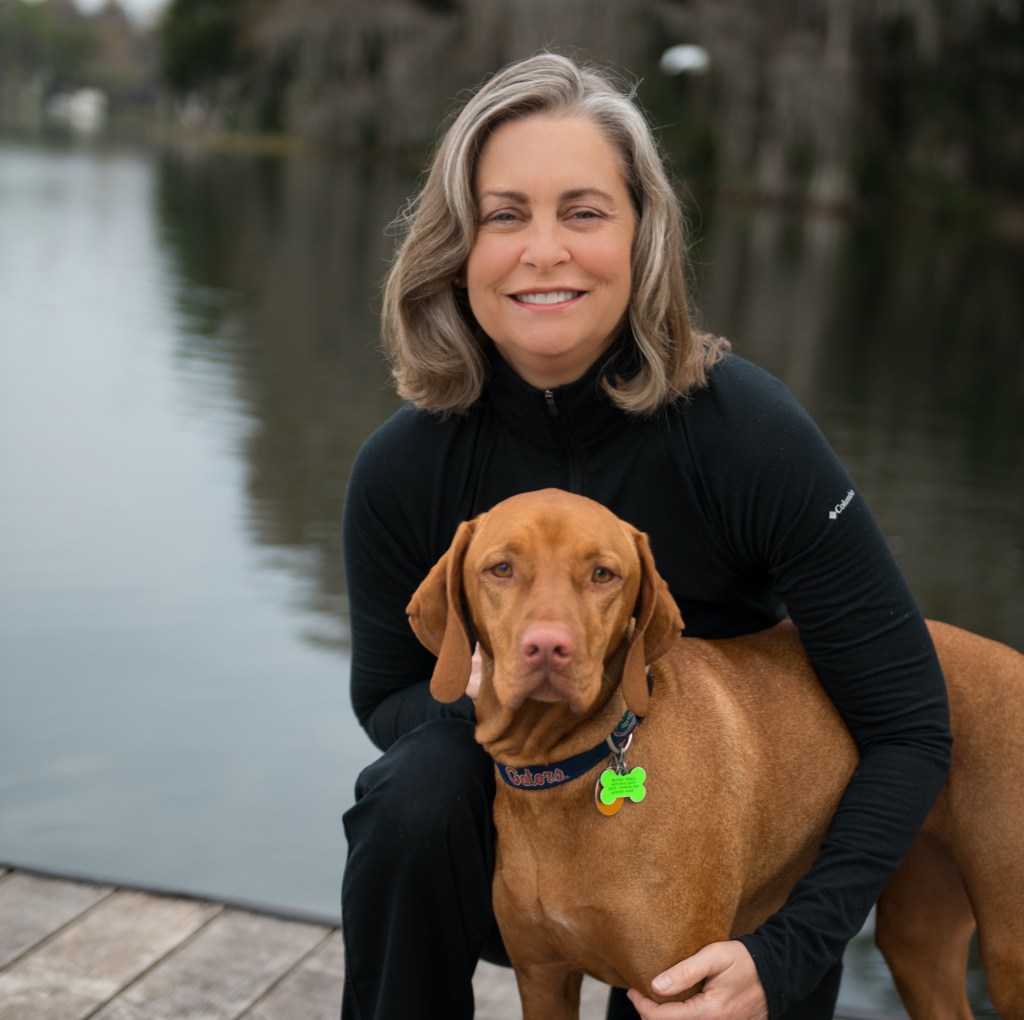
Leslie Kemp Poole, PhD, is associate professor of environmental studies at Rollins College in Winter Park, Florida. She is author of “Saving Florida: Women’s Fight for the Environment in the Twentieth Century” and former executive director of the Marjorie Kinnan Rawlings Society. Poole is an editor of the recently released book “Tracing Florida Journeys: Explorers, Travelers, and Landscapes Then and Now.”
Top: The entrance to Yearling Trail in the Juniper Prairie Wilderness, Ocala National Forest. Photo by Rolf Mülle
This article first appeared on The Marjorie and is republished here under a Creative Commons Attribution-NoDerivatives 4.0 International License.


No comments:
Post a Comment