![]() |
| Cover of a 1904 home health medical manual. Credit: UF Health |
Friday, April 24, 2020
Losing one's mind, for real
Writer. Gardener. Needlework nerd. History fan married to space geek. Blogger. Author of short stories, biographies, and Catholic historical romance novels. https://gerribauer.com
Wednesday, March 25, 2020
Florida, 1918 Spanish flu, and coronavirus
![]() |
| Pensacola was hit hard by the 1918 Spanish flu. This screengrab is from the Oct. 4, 1918 Pensacola Journal. |
Writer. Gardener. Needlework nerd. History fan married to space geek. Blogger. Author of short stories, biographies, and Catholic historical romance novels. https://gerribauer.com
Wednesday, February 26, 2020
Of missions and marriages
![]() |
| All friends were cordially invited to attend St. Peter Catholic Church's annual picnic in 1922. Screengrab of DeLand Daily News article is from America's Historical Newspapers. |
This opens up a new portal for me! Day-to-day local history is only a click away.
I love the way newspapers in the olden days kept track of the common aspects of regular folks' lives. The papers reported on people's vacations, houseguests, picnics, and so on. Such minutiae gives me a sense of domestic life in earlier periods.
Because my parish church, St. Peter, was established in DeLand in 1883, I first browsed the online archives for a look at church doings in years gone by. Here are some examples, with quotes taken directly from the articles:
- On Jan. 15, 1904, John Francis Cairns and Mary Ellen Donahue were married. "The day opened with a storm, which continued up to 9:30 raining torrents; but notwithstanding this, the little church was filled with invited guests. At 9:30 the skies cleared and the sun came out and there was beautiful weather for the marriage." January weather is generally nice in Florida, and I imagine it was even prettier after the storm blew through. The rest of the wedding day was splendid, according to the newspaper reporter: "The impressive ceremony of the Catholic Church was used. After the ceremony, about 65 invited guests repaired to the home of the groom's parents on Amelia Avenue, where congratulations were extended and a most sumptuous wedding breakfast partaken of. Bushnell's orchestra was present at the house and discoursed sweet music." The DeLand Daily News ended its account by wishing the couple a long and happy married life.
- The bishop came to town March 18, 1904, to celebrate the sacrament of Confirmation at St. Peter Church. "Bishop Kenney of St. Augustine was assisted by Father Chisholm of DeLand," the article notes. Nine candidates were confirmed and the church was filled with people for the occasion. "Before performing the impressive ceremony, Bishop Kenney gave a most lucid explanation of the procedure and the symbolisms," the reporter wrote. Then, as now, some editorializing crept in. The reporter said "Bishop Kenney has an easy, quiet way, a pleasant speech that impresses one very favorably." We also learn that the "music was exceptionally good."
- The Jan 23, 1918, edition of the paper reported on a week of missions at St. Peter. The mission was opened on a Sunday by Dominican fathers. The opening night sermon focused on mortal sin. On Monday evening, the missionary preached on "The Evil of Gossiping." The next night - the day the newspaper was published - was to focus on "The Home." The reporter closed the article with a wish that parishioners and their friends "will take advantage of this precious opportunity of hearing exposed and explained the doctrines and teaching of the Catholic Church."
- Not all church doings were inside the building. On June 21, 1922, the newpaper announced that "members and friends of the St. Peter's Catholic Church will hold their annual picnic Thursday, June 22, motoring to Coronado Beach. About 15 or 20 cars will leave from DeLand, being joined by a car from Leesburg and two cars from Eustis." The group was to use Ocean View hotel as headquarters. A picnic dinner, games, and surf bathing "are among some of the delightful attractions which are on the program to make this the best picnic ever." I hope they had a good time.
Writer. Gardener. Needlework nerd. History fan married to space geek. Blogger. Author of short stories, biographies, and Catholic historical romance novels. https://gerribauer.com
Monday, January 27, 2020
Progress steamrolled sacred grounds
![]() |
| This was photographed at an abandoned cemetery in Charlotte County. Efforts were made to clean up the burial ground about 10 years ago. (Photo credit: Jeremy, Waymarking website) |
Cemeteries are on my mind. For two reasons. One, I am helping my elderly father through his final days. In the not-too-distant future, I'll stand at the New York burial site he purchased some 50 years ago. I'll watch as he and my deceased mother's cremains are put to rest next to a baby they buried decades ago.
At least I know where my long-gone brother's grave is. And where my parents are to be buried. And what the family tombstone looks like and what names and dates will be added to it. Finally, I'll have the peace of knowing my loved ones will rest undisturbed in a long-established Catholic cemetery.
That's not the case with lost and/or forgotten African-American cemeteries in Florida. It seems every week I hear another news report about the discovery of a lost cemetery. We're not talking isolated resting grounds hidden in overgrown woods. I'm hearing disturbing reports of established cemeteries that were paved over during the first half of the 20th century. Roads, stores, houses, you name it, were built atop what should have been protected sacred ground.
Such wanton disregard is hard for me to understand. These aren't isolated cases.There are numerous videos in Tampa news station 10 News WTSP's YouTube playlist "Erased: Tampa Bay's Forgotten Cemteries."
The videos focus on several cemeteries in the Tampa area. Closer to my part of Central Florida, there was news a few years ago about an African-American cemetery split from its community - and subsequently forgotten - when Interstate 4 came through Lake Helen.
Another nearby abandoned cemetery is associated with a late 19th-early 20th century African-American community named Garfield. The settlement of Garfield was founded by ex-slaves after the Civil War. The land was lost to back taxes during the Depression and pre-World War II years. Today, what used to be Garfield - and its cemetery - are swallowed by the city of Deltona.
The Garfield cemetery was briefly in the news 15 or 20 years ago, when someone stumbled across its location. I haven't heard a thing since then. The city of Deltona apparently did an archaeological survey. It, too, was buried. I tried to read it over a decade ago, but the city never responded to my request to see the document.
In another local case, a forgotten potter's field was rediscovered during construction of a hospital expansion in DeLand. Only a few old-timers remembered the site had been the burial place for people who had died indigent and/or unclaimed.
These local cases, plus what's being uncovered in Tampa, plus others I've read about, are chilling signs of a disheartening disrespect that likely infected much of Florida in the past century. May all the deceased and the sacred grounds they rest in once again regain their dignity.
Click here or on the photo below to go to a YouTube playlist about lost cemeteries in the Tampa Bay area:
Writer. Gardener. Needlework nerd. History fan married to space geek. Blogger. Author of short stories, biographies, and Catholic historical romance novels. https://gerribauer.com
Friday, December 20, 2019
Secret sanctuary a holy place
![]() |
| Segment from a colorized postcard from 1938 shows the Shrine of Ste. Anne des Lacs in Lake Wales, Florida. Photo credit: Florida Memory |
Today, only handfuls of the faithful and the curious make their way to the lakefront Shrine of Ste. Anne des Lacs. Stonework crumbles in places and chipped inlaid tiles tell of past glory. An ornately decorated church once on the property is long gone.
But the essence and spirituality of the shrine remain. Many visitors describe feeling a sense of peace when they stop - and perhaps pray - before a statue of the Blessed Virgin Mary in a grotto built to resemble the one at Lourdes. In a 2015 article, the Lakeland Ledger dubbed the shrine a secret sanctuary.
Secret, indeed. I've lived in Florida a long time and love to explore historic sites and Catholic-related places. How can I have been ignorant of the very existence of the Ste. Anne des Lacs shrine? The site is apparently overseen by the Holy Spirit Catholic Church in Lake Wales. The parish history page makes only a brief mention of the shrine, under the year 1921. The site says Easter Mass is celebrated there.
I cobbled together the place's history from the WPA guide, the Ledger article, YouTube videos, Wikipedia, and Florida Memory, which is where I located the colorized postcard pictured with this post.
Thanks for the shrine's very existence are due to a long-ago resident named Napoleon Pelletier. He was among a group of Canadian Catholics who wintered in Lake Wales to escape harsh weather in the early 20th century.
Either way, we do know the date of the shrine's construction: 1920. By the time of the WPA guidebook's write-up in 1939, the property contained stone grottoes, statuary, and a little church in which Morsollier had painted scenes from the Holy Land. Even relics were kept at the shrine.
Here's how the guidebook describes shrine activity:
"Pilgrimages are made here annually as to the shrine of Our Lady of Lourdes in France and the shrine of Ste. Anne de Beaupre in Canada. High dignitaries and priests of the Roman Catholic church in the United States and Canada assist the local priest in conducting the ceremonies." (page 466)Those days are long gone. The place's faded grandeur - but also its current dignity - are evident in the YouTube video I linked below and in photos on Facebook.
Writer. Gardener. Needlework nerd. History fan married to space geek. Blogger. Author of short stories, biographies, and Catholic historical romance novels. https://gerribauer.com
Sunday, November 24, 2019
In search of Dr. Annie Mae Walker
![]() |
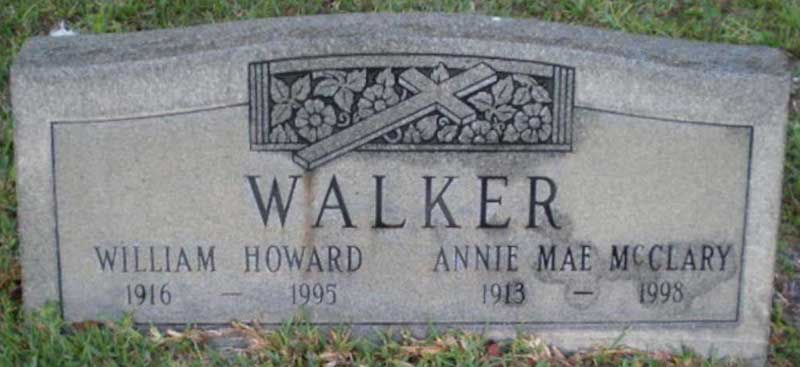
| Dr. Annie Mae McClary Walker is buried in Greenwood Cemetery in Daytona Beach. This image is from the Find A Grave website. |
Born in a Florida turpentine camp in 1913. Died with a string of "firsts" and awards to her name in 1998. Why hasn't anyone written an in-depth biography of Dr. Annie Mae McClary Walker?
I'd write the bio, but this is an #ownvoices story if there ever was one. I say that even though I'm ambivalent about the movement. I believe writers, actors, artists - all creatives - deserve the freedom to create at will, with no barriers placed. So ... my former-journalism self could write her life story. But I instinctively know an #ownvoices writer would produce a deeper bio than I could achieve.
![]() |
Screengrab is from an article,
"The American Negro in College, 1943-1944," in a 1944 issue of The Crisis Magazine. Annie Mae McClary Walker was known as Annie Mae Tooks at the time. |
Dr. Walker was a pioneering African-American-Seminole educator whose strong personality and amazing life shine in a conversational biography penned by Dr. Lynn Hawkins, Always the First, The Story of Annie Mae Walker (Taylor and Seale Publishing, 2016). The book is based on hundreds of hours of recorded interviews between the two educators, who were friends. But when my Ravenclaw self went searching for more information about Dr. Walker, I found almost nothing. A search of academic databases turned up zilch. She doesn't even have a Wikipedia page. Dr. Walker, where are you?
This was a woman who created Black Studies programs, was integral to the Head Start program, fought hard for civil rights, integrated neighborhoods, and was the first Black professor of Black Studies at SUNY Stony Brook in New York. Among other achievements. And she knew what it was like to have a cross burned on her front lawn.
Her life journey intersected with an incredible roster of people. She was related by marriage to Mary McCleod Bethune and was taught by Zora Neale Hurston during the writer's brief tenure at Bethune-Cookman College (now University). She marched with Dr. Martin Luther King and had Malcolm X as a houseguest.
Dr. Walker's life was not without warts, as are all our lives. I haven't yet met a perfect being and won't until I meet the Lord. But the combined parts make up a fascinating whole. I look forward to reading an in-depth biography on this most interesting woman.
Writer. Gardener. Needlework nerd. History fan married to space geek. Blogger. Author of short stories, biographies, and Catholic historical romance novels. https://gerribauer.com
Wednesday, October 30, 2019
Ma Barker haunts Florida house
![]() |
| Historic image of tiny Oklawaha is part of a presentation, "The Records and Legend of the Kate "Ma" Barker Shootout at Ocklawaha," by George Albright III and Carson Good. |
In the 1930s, Ma Barker was said to be the mastermind behind the gang, which consisted of her sons and other men. Gang members robbed banks, killed, kidnapped, and hijacked with cold-blooded ruthlessness. At the time, Ma was in the nation's collective consciousness as a Most Wanted Woman, a harridan who presided over an evil empire. But modern history discounts that theory as something promoted by J. Edgar Hoover and the FBI.
Ma's full name was Arizona Clark Barker, but she used the name Kate. Three of her four sons were active in the famous gang along with other young men. She traveled with them and seems to have served as a protective cover. For example, she was the one who arranged to rent the rural hideaway on Lake Weir in Ocklawaha. But her full role remains murky, at least to me.
On the one hand, her four sons were in and out of trouble and prison, starting at young ages. Something was seriously amiss from the start in that household. Online sites that borrow heavily from one another portray her as an early version of today's helicopter parents. She thought her boys could do no wrong and she intervened with the law to save their hides more than once.
![]() |
| Ma Barker |
So who knows. Ma's true story is buried beneath lore, legend, and speculation. What is a known fact is that she and her son Fred were in the lakefront house in Ocklawaha the day the FBI came gunning. The other gang members had left for reasons unknown to me.
Ma and Fred refused to surrender. The gun battle lasted hours, and burned itself into local lore. With good reason! You see from the photo that Ocklawaha was about as small and quiet as a Florida town could get in that era. Having bank robbers, the FBI, and a Wild West shootout in town sent shockwaves through the region.
Among local residents who witnessed the shootout was the great-grandfather of Marion County Tax Collector George Albright III. In fact, the younger Albright grew up next to the famous house. He's done a lot of research on the subject and is involved in the renovation effort, which included relocating the house to the Carney Island Recreation and Conservation Area in Ocklawaha.
Before, during, and after the project, stories surfaced about how Ma haunts the house. These recollections came from reputable people. Don't laugh. Read at least this article from the Tampa Bay Times before you decide to dismiss the idea.
If you prefer only verified facts, check out the treasure trove of shootout documents and photos collected in a presentation by Albright III and Carson Good, whose family owned the house. The PDF and an accompanying video are generously shared online. Go to the Online Forms page of the Marion County Tax Collector website and scroll down to the "Other" heading near the bottom of the page. There, you'll find links to "The Records and Legend of the Kate 'Ma' Barker Shootout at Ocklawaha."
After that, go visit and tour the house. If you dare.
Here's a link to the video of the house tour by the Ocala Star-Banner: https://www.youtube.com/watch?v=7PSK-ufEAJA
Writer. Gardener. Needlework nerd. History fan married to space geek. Blogger. Author of short stories, biographies, and Catholic historical romance novels. https://gerribauer.com